
Understanding Digital Marketing And Why It Matters Today’s Digital World
INTRODUCTION
When starting or growing a business, reaching the right people is important. Today, many people use the internet to discover businesses, explore products, and find services. Having an online presence helps businesses introduce themselves to potential customers and share what they offer.
However, simply taking a business online is not always enough. People need to discover it, understand its products or services, and see why it might suit their needs.This is where digital marketing plays an important role. .
Digital marketing helps businesses promote their products and services through online channels such as websites, search engines, and social media. Whether you own a small shop, manage a growing business, or are developing a personal brand, understanding digital marketing can help you make better decisions about your online presence.
In this article, we’ll explore what digital marketing means, its main types, why it matters, and how businesses can get started.
WHAT IS DIGITAL MARKETING?
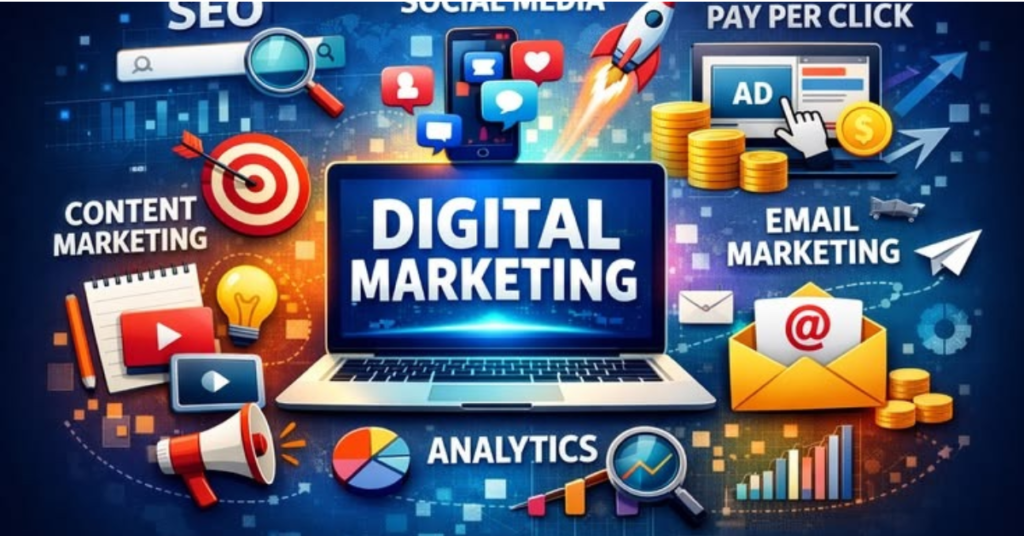
Digital marketing is the process of promoting a business, product, or service online and through other digital channels. It helps businesses reach potential customers, share information, and build connections with people who may be interested in what they offer.
For example, imagine you own a clothing business. You create an Instagram account to showcase your collections, develop a website to display your products, and improve your website content so people can discover it through Google. These are examples of how businesses use digital marketing.
Unlike traditional marketing methods such as newspaper advertisements, brochures, and billboards, digital marketing uses online platforms to communicate with audiences. It also lets businesses measure many marketing activities and use that information to improve their strategies.
Digital marketing is not just for big companies. Small businesses, local shops, startups, and individual entrepreneurs can also use it to introduce their products and services to relevant audiences.
MAIN TYPES OF DIGITAL MARKETING
Digital marketing includes so many methods, each serving a different purpose. Businesses can choose the methods that suit their goals, audience, and budget.
- Search Engine Optimisation (SEO)
Search Engine Optimisation, commonly known as SEO, helps improve a website’s visibility in search engine results. It involves creating useful content, organising website pages clearly, and helping search engines understand what a website offers.
For example, someone searching for a clothing shop in Ernakulam might discover a relevant business through Google. A well-organised website with helpful information has an opportunity to appear in relevant search results.
SEO takes time, and no particular ranking is guaranteed. However, it can help businesses attract visitors who are already searching for related products, services, or information.
- Social Media Marketing (SMM)
Social media marketing means promoting a business through platforms such as Instagram, Facebook, and LinkedIn. Businesses can share photographs, videos, posts, and stories to introduce their products and communicate with their audience.
A clothing brand, for instance, might publish new collection photographs, share styling tips, and answer customer questions through messages.
Social media marketing is not just about gaining followers. It also helps businesses build relationships, understand customer interests, and keep people informed about their offerings.
- Website Development.
Through a website, a business gets its own space on the internet. Visitors can learn about the brand, explore its services or products, and find contact information.For example, a digital marketing professional can use a website to present services, publish blog articles, showcase projects, and receive enquiries from potential clients.
A useful website should be easy to navigate, mobile-friendly, and organised around visitors’ needs. It can also support other marketing activities by providing a central place for people to learn more about a business.
- Performance Marketing
Performance marketing focuses on campaigns where specific actions can be measured, such as website visits, enquiries, leads, or purchases.
For example, an online clothing store might run a paid Instagram advertisement to promote a new collection and monitor how many people click the advertisement or make a purchase.
Tracking campaign results helps businesses understand whether their advertising is supporting their goals and where improvements may be needed.
- Content Marketing
Content marketing involves creating and sharing useful information that attracts and helps a particular audience. Common formats include blog articles, videos, guides, and social media posts.
A skincare business might publish an article about building a simple skincare routine or create a video explaining how to use its products.
Through content marketing, we can answer questions, introduce useful ideas, and give people a reason to explore a brand. Over time, it can support customer trust and strengthen a business’s online presence.
- Email Marketing
Email marketing involves sending relevant messages to people who have agreed to receive updates from a business. These messages might include product announcements, useful information, or special offers.
For example, an online store could send subscribers an email introducing a new collection.
When used thoughtfully, email marketing helps businesses maintain communication with interested customers. Messages should provide value and respect subscribers’ preferences.
WHY DOES DIGITAL MARKETING MATTERS?
Digital marketing has become an important way for businesses to connect with people who use the internet to discover products and services. Here are some reasons it matters.
- It Helps People Discover Your Business
A business needs to be visible before potential customers can consider its offerings. Search engines, websites, and social media give businesses opportunities to introduce themselves to people who may be interested.
For example, someone might discover a local bakery through Google or find a clothing brand through an Instagram video.
- It Helps Reach Relevant Audiences
Digital marketing allows businesses to create content and campaigns suited to particular audiences. A children’s clothing business might focus on parents, while a photography studio may promote its services to people looking for wedding photography.
Understanding the audience helps businesses share more relevant information instead of trying to reach everyone.
- It Provides Measurable Insights
Many digital marketing activities can be measured using analytics tools. Businesses can review website visits, advertisement clicks, enquiries, and other relevant actions.
These insights help identify what attracts attention and where improvements may be needed. However, high website traffic or social media engagement does not always translate into sales, so businesses should measure results that match their goals.
- It Offers Options for Different Budgets
Businesses do not always need a large budget to begin building an online presence. They can start by sharing useful social media content, improving their website, or creating relevant blog articles.
Paid advertising is another option when a business has a clear objective and suitable budget. The best approach depends on the business’s needs and resources.
- It Helps Build Customer Relationships
Businesses can use social media, email, and helpful website content to answer questions and maintain communication with customers.
For example, a clothing brand can share styling ideas, respond to questions about sizes, and announce new arrivals. Consistent and helpful communication can make customers more familiar with the brand.
HOW CAN BUSINESSES GET STARTED WITH DIGITAL MARKETING?
Starting with digital marketing does not mean using every available platform. Businesses can begin with a few practical steps and expand their efforts as they learn what works.
- Understand Your Audience
Think about who is most likely to need your product or service. Consider their interests, needs, and questions. This understanding can help you choose suitable platforms and create relevant content.
- Set Clear Goals
Decide what you want to achieve. Your goal might be to increase brand awareness, attract website visitors, receive more enquiries, or generate sales.
Clear goals help you select suitable marketing activities and measure progress.
- Choose Suitable Platforms
Choose platforms based on your audience and business needs. A visually focused brand might benefit from Instagram, while a local service business may benefit from a website and an eligible Google Business Profile.
You can explore additional platforms as your needs grow.
- Create Helpful Content
Share information that your audience will find useful. A clothing business could publish outfit ideas and product updates, while a digital marketing professional could write beginner-friendly articles about SEO and social media.
Focus on answering questions and providing value rather than posting only promotional messages.
- Review and Improve
Check your results regularly. Analyse which pages attract visitors, which posts generate meaningful engagement, and whether your activities are helping you crack your goals.
Not every activity will produce immediate results. Use what you learn to make thoughtful improvements over time.
Conclusion
Digital marketing gives businesses different ways to become visible online, communicate with potential customers, and promote their products or services. From SEO and social media marketing to website development and content creation, each method can support different business goals.
Success does not depend on using every platform or following every trend. It begins with understanding your audience, choosing suitable methods, and sharing useful information consistently.
Whether you are starting a business, building a personal brand, or learning about digital marketing, understanding the basics is a valuable first step. Keep learning, review your progress, and choose strategies that suit your goals.